How is this drug name pronounced?
Linvoseltamab: LIN-voe-SEL-ta-mab Lynozyfic: lin-oh-ZI-fik
What cancer(s) does this drug treat?
Multiple Myeloma (MM)
Lynozyfic is approved for:
- Patients with multiple myeloma who have received at least four prior treatments for their disease, including a proteasome inhibitor, an immunomodulatory agent, and an anti-CD38 antibody (e.g., daratumumab (Darzalex) or isatuximab-irfc (Sarclisa)), but whose cancer either did not respond to treatment (refractory) or has since come back (relapsed).
Limitations of use
Limitations: Lynozyfic should only be administered in a treatment center and by adequately trained healthcare professionals who can ensure proper monitoring and immediate management of side effects associated with the drug.
Age: The safety and efficacy of Lynozyfic in patients under 18 years of age have not been established.
Pregnancy/Breastfeeding: Lynozyfic is not recommended for use during pregnancy due to potential for harm to the fetus. Patients who can become pregnant are advised to use contraception during treatment with Lynozyfic and for at least 3 months after the last dose of Lynozyfic. The risks associated with Lynozyfic during breastfeeding are not known and cannot be ruled out. Due to the potential for adverse reactions in the breastfed child, patients are advised not to breastfeed during treatment with Lynozyfic and for 3 months after the last dose of Lynozyfic.
Interactions with other drugs: Patients taking certain CYP substrates should be monitored for toxicity during the start of treatment with Lynozyfic.
Effects on the ability to drive and use machines: Patients are advised to refrain from driving, engaging in hazardous occupations or activities, and operating heavy machinery for at least 24 hours after each of the step-up treatment doses of Lynozyfic or, if any neurological side effects occur, until symptoms resolve.
What type of immunotherapy is this?
How does this drug work?
Targets:
- B cell maturation antigen (BCMA) on plasma cells and multiple myeloma cells
- CD3 receptor on T cells
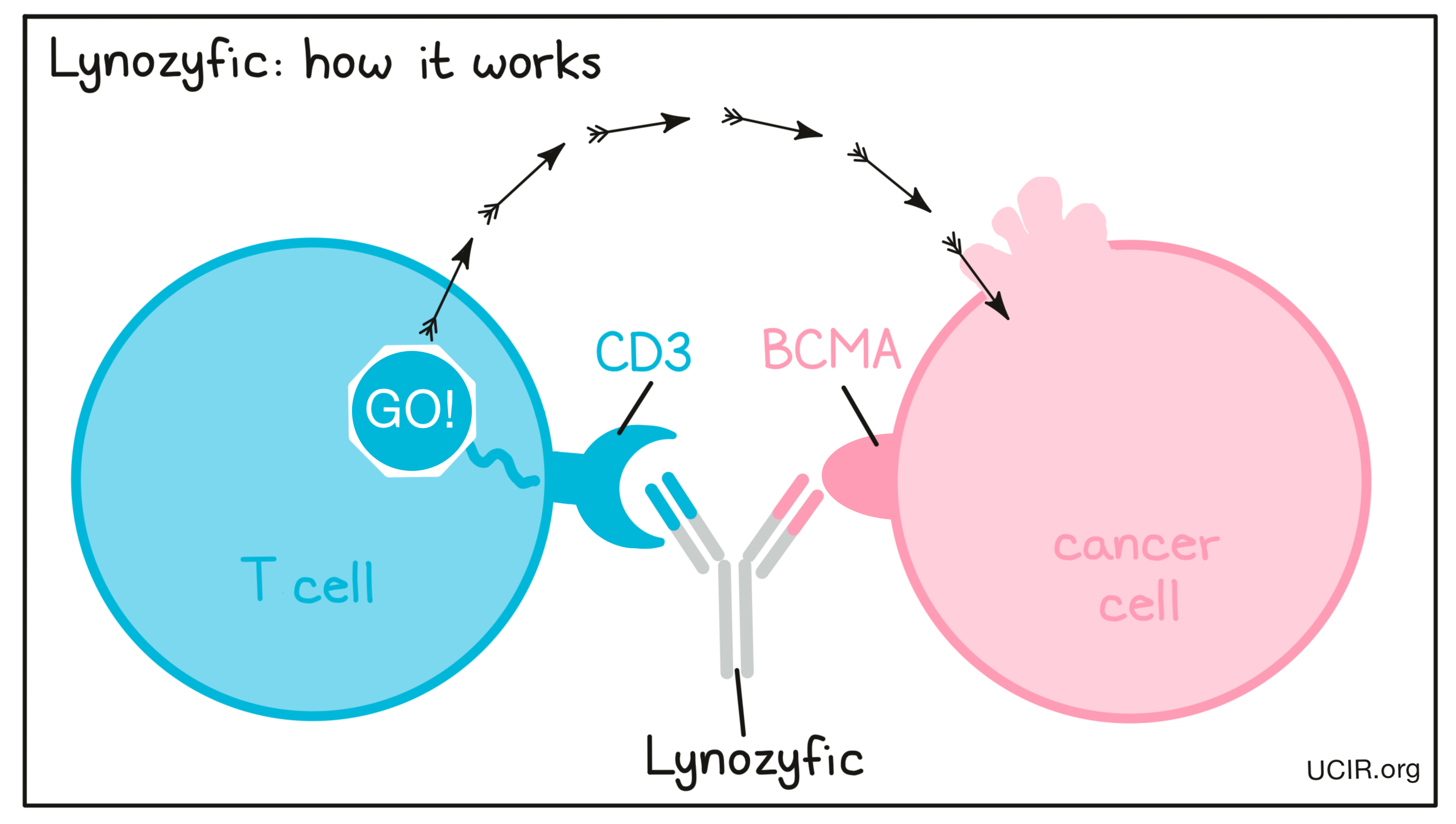
Lynozyfic is a “bispecific antibody”. Antibodies are molecules that can bind to a particular target molecule. Bispecific antibodies are artificially made in the laboratory and can bind to two different targets at the same time. Lynozyfic binds to:
- a molecule called B cell maturation antigen (BCMA) on the surface of plasma cells and multiple myeloma cells. BCMA is present at much higher quantities on the surface of cancer cells than normal healthy cells.
- a molecule called CD3 on the surface of T cells – the primary immune cells involved in killing cancer cells. CD3 is part of the T cell receptor, which is critical to the function of the T cell and is involved in stimulating the T cell to become active.
Because Lynozyfic can bind to one molecule on multiple myeloma cells and another on T cells at the same time, it acts as a bridge and keeps the T cell in close contact with the cancer cell. By binding CD3 on the T cell, Lynozyfic also stimulates the T cell to become activated and kill the cell it is bound to. Bispecific antibodies that direct T cells to kill cancer cells by binding to both cells at the same time are known as bispecific T cell engagers (BiTEs).
How is the drug given to the patient?
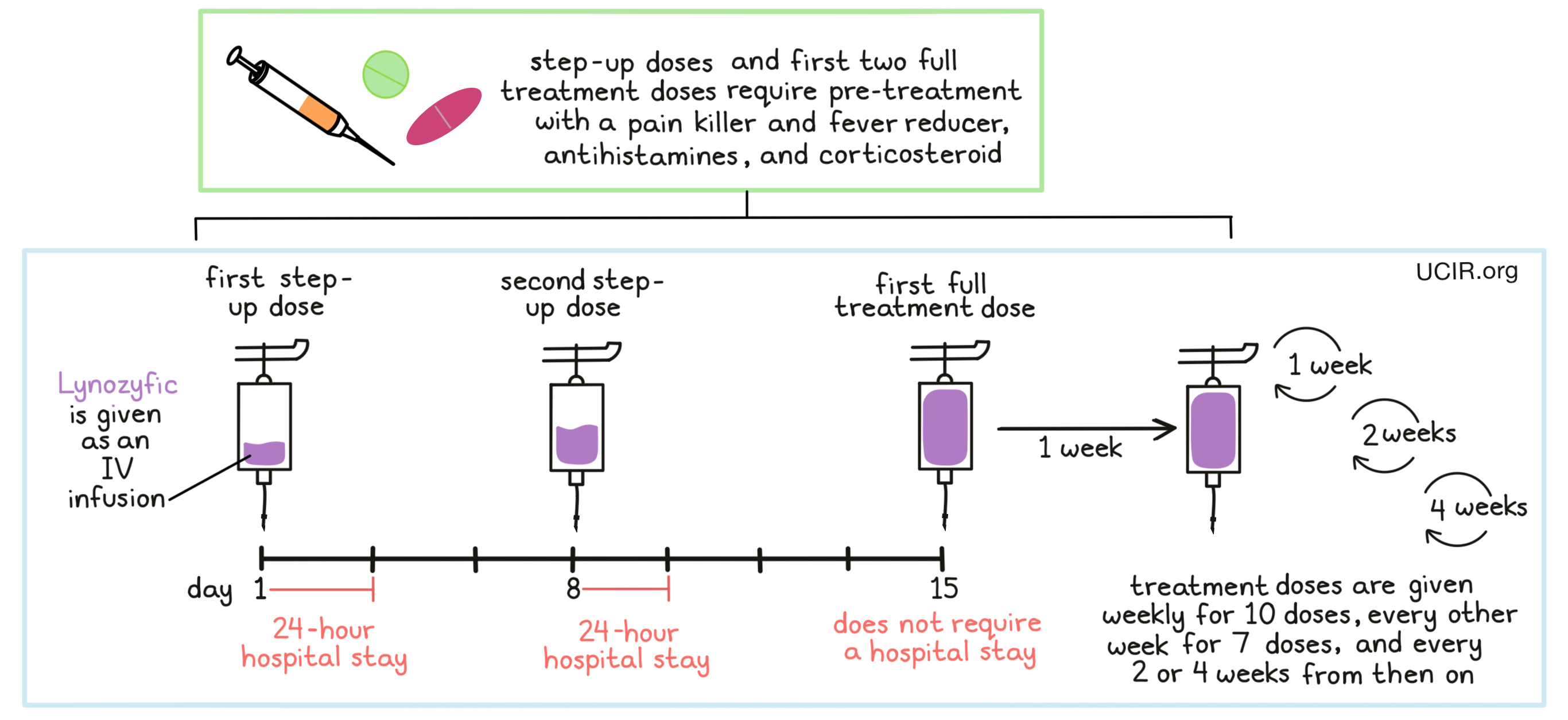
Lynozyfic is given through a tube into a vein (intravenous infusion, i.v.). To start, a small dose of Lynozyfic is given on day 1, followed by a larger dose on day 8, and a full treatment dose on day 15. This “step-up” dosing schedule helps to reduce the risk of a reaction to Lynozyfic.Each step-up dose requires a 24-hour hospital stay to monitor for potentially serious reactions to treatment. Additionally, during step-up dosing and for the first two full treatment doses, patients receive several medications prior to each dose of Lynozyfic to help reduce the risk of cytokine release syndrome (a common and potentially severe side effect of Lynozyfic treatment):
- A corticosteroid (dexamethasone) 1-3 hours prior to infusion
- An antihistamine (diphenhydramine) 30-60 minutes prior to infusion
- A painkiller and fever reducer (acetaminophen) 30-60 minutes prior to infusion
After step-up dosing and the first two full treatment doses are complete, pre-treatment medications may no longer be needed, as long as no symptoms of cytokine release syndrome are observed. Patients then receive Lynozyfic on a weekly basis for 10 doses. For patients who have achieved and maintained a response to treatment after 10 doses, Lynozyfic is given every other week for 7 doses, and then every 4 weeks thereafter.
During treatment with Lynozyfic, patients should be treated with additional medications to prevent certain types of infections (e.g., pneumonia and herpes).
What are the observed clinical results?
It is important to keep in mind that each patient’s outcome is individual and may be different from the results found in the clinical studies. In addition, immunotherapy can sometimes take several months to yield an observable treatment response.
Multiple Myeloma
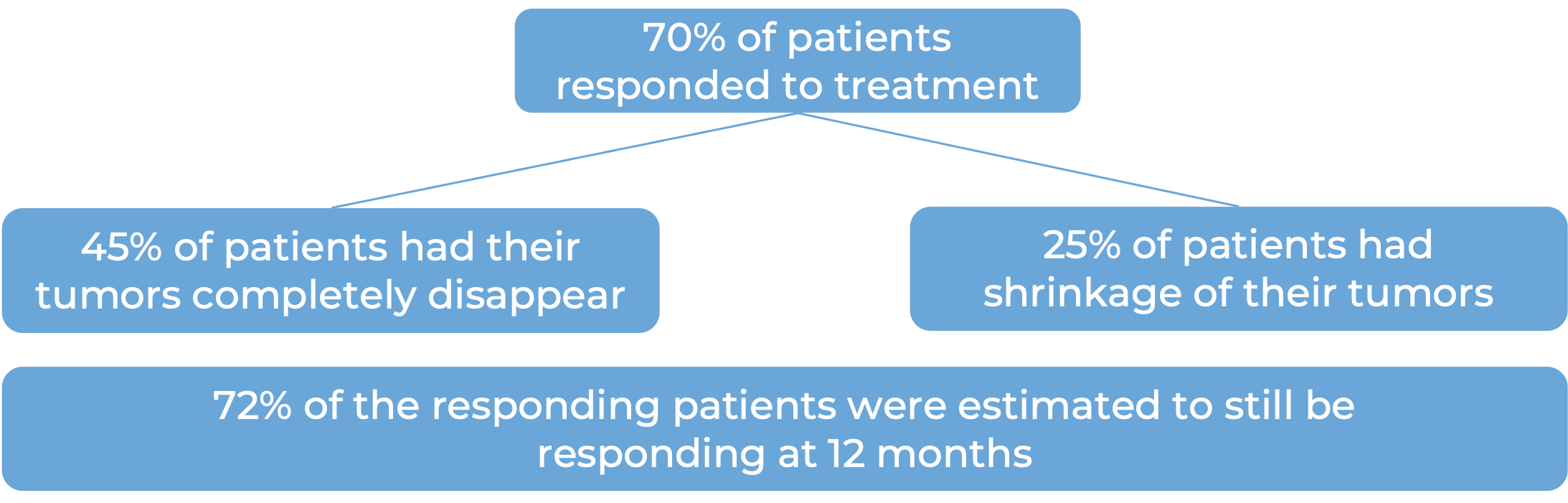
In a clinical study, 80 patients with multiple myeloma who had received at least 3 prior treatments for their disease, including a proteasome inhibitor, an immunomodulatory agent, and an anti-CD38 antibody (e.g., daratumumab (Darzalex) or isatuximab-irfc (Sarclisa)), but whose cancer either did not respond to treatment (refractory) or had since come back were treated with Lynozyfic.
What are the potential side effects?
The most common side effects of Lynozyfic include pain in the joints and muscles, cytokine release syndrome, cough, upper respiratory tract infection, diarrhea, fatigue, pneumonia, nausea, headache, and shortness of breath. Laboratory abnormalities are also common. Some side effects, such as cytokine release syndrome, immune effector cell-associated neurotoxicity syndrome (ICANS) and other neurologic problems), infections, low white blood cell counts (neutropenia), and liver toxicity/damage can become serious or life-threatening. Patients and caregivers receive careful instructions to monitor for signs and symptoms of side effects. These conditions are managed by the healthcare provider.
Cytokine release syndrome (CRS)
CRS is caused by a widespread release of molecules called cytokines, which can cause inflammation and can affect the function of various organs. Cytokines may be released by the T cells to which Lynozyfic binds, or by other immune cells in the patient’s body. Signs and symptoms of CRS include fever, low blood pressure, hypoxia (low oxygen levels), fast heartbeat rate, shortness of breath, chills, headache, and elevated liver enzymes. CRS typically occurs within hours or a few days after the first or second step-up dose of Lynozyfic in treatment cycle 1. A healthcare provider should be immediately notified if symptoms occur.
Neurologic toxicity or Immune effector cell-associated neurotoxicity syndrome (ICANS)
Some of the cytokines released during CRS can result in disruption of the blood–brain barrier, leading to the development of neurological toxicities. ICANS can occur within hours or days of treatment with Lynozyfic (mainly after the first or second step-up dose in treatment cycle 1). Symptoms of ICANS include shaking, lethargy, seizures, confusion, disorientation, and difficulty with speech or handwriting. A healthcare provider should be immediately notified if symptoms occur.
For a more complete list of possible side effects, see the full prescribing information.
Manufacturer
Regeneron Pharmaceuticals, Inc.
Approval
FDA and EMA
Links to drug websites
Last updated: July 16, 2026
How is this drug name pronounced?
Linvoseltamab: LIN-voe-SEL-ta-mab Lynozyfic: lin-oh-ZI-fik
What cancer(s) does this drug treat?
Multiple Myeloma (MM)
Lynozyfic is approved for:
- Patients with multiple myeloma who have received at least three prior treatments for their disease, including a proteasome inhibitor, an immunomodulatory agent, and an anti-CD38 antibody (e.g., daratumumab (Darzalex) or isatuximab-irfc (Sarclisa)), but whose cancer either did not respond to treatment (refractory) or has since come back (relapsed).
Limitations of use
Limitations: Lynozyfic should only be administered in a treatment center and by adequately trained healthcare professionals who can ensure proper monitoring and immediate management of side effects associated with the drug.
Age: The safety and efficacy of Lynozyfic in patients under 18 years of age have not been established.
Pregnancy/Breastfeeding: Lynozyfic is not recommended for use during pregnancy due to potential for harm to the fetus. Patients who can become pregnant are advised to use contraception during treatment with Lynozyfic and for at least 5 months after the last dose of Lynozyfic. The risks associated with Lynozyfic during breastfeeding are not known and cannot be ruled out. Due to the potential for adverse reactions in the breastfed child, patients are advised not to breastfeed during treatment with Lynozyfic and for 5 months after the last dose of Lynozyfic.
Interactions with other drugs: Patients taking certain CYP substrates should be monitored for toxicity during the start of treatment with Lynozyfic.
Live vaccines: Patients should not be treated with live vaccines during treatment with Lynozyfic and for at least 4 weeks prior to starting treatment.
Effects on the ability to drive and use machines: Patients are advised to refrain from driving, engaging in hazardous occupations or activities, and operating heavy machinery for at least 24 hours after each of the step-up treatment doses of Lynozyfic or, if any neurological side effects occur, until symptoms resolve.
What type of immunotherapy is this?
How does this drug work?
Targets:
- B cell maturation antigen (BCMA) on plasma cells and multiple myeloma cells
- CD3 receptor on T cells
Lynozyfic is a “bispecific antibody”. Antibodies are molecules that can bind to a particular target molecule. Bispecific antibodies are artificially made in the laboratory and can bind to two different targets at the same time. Lynozyfic binds to:
- a molecule called B cell maturation antigen (BCMA) on the surface of plasma cells and multiple myeloma cells. BCMA is present at much higher quantities on the surface of cancer cells than normal healthy cells.
- a molecule called CD3 on the surface of T cells – the primary immune cells involved in killing cancer cells. CD3 is part of the T cell receptor, which is critical to the function of the T cell and is involved in stimulating the T cell to become active.
Because Lynozyfic can bind to one molecule on multiple myeloma cells and another on T cells at the same time, it acts as a bridge and keeps the T cell in close contact with the cancer cell. By binding CD3 on the T cell, Lynozyfic also stimulates the T cell to become activated and kill the cell it is bound to. Bispecific antibodies that direct T cells to kill cancer cells by binding to both cells at the same time are known as bispecific T cell engagers (BiTEs).
How is the drug given to the patient?
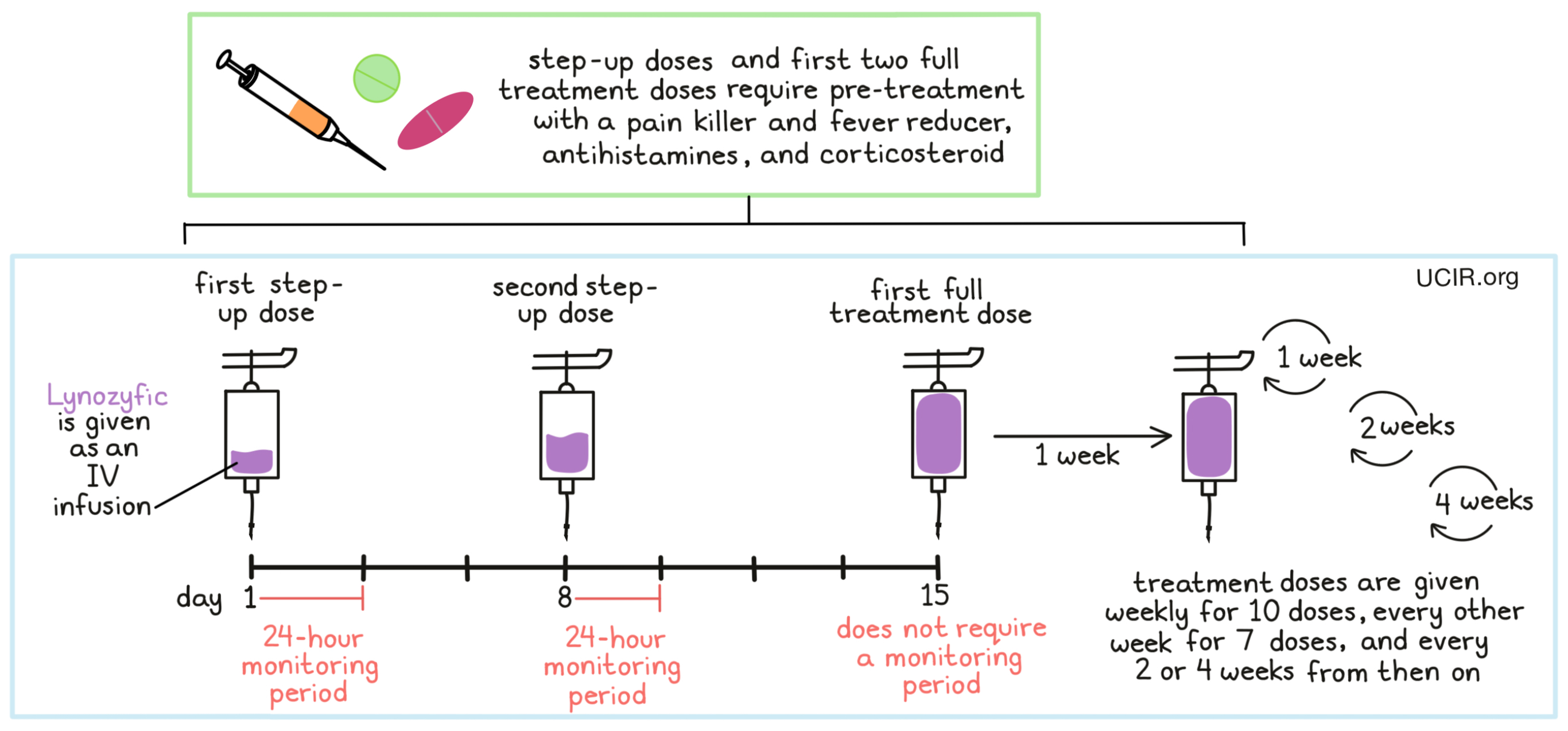
Lynozyfic is given through a tube into a vein (intravenous infusion, i.v.). To start, a small dose of Lynozyfic is given on day 1, followed by a larger dose on day 8, and a full treatment dose on day 15. This “step-up” dosing schedule helps to reduce the risk of a reaction to Lynozyfic. During step-up dosing and first two full treatment doses, patients receive several medications prior to each dose of Lynozyfic to help reduce the risk of cytokine release syndrome (a common and potentially severe side effect of Lynozyfic treatment):
- A corticosteroid (dexamethasone) 1-3 hours prior to infusion
- An antihistamine (diphenhydramine) 30-60 minutes prior to infusion
- A painkiller and fever reducer (paracetamol) 30-60 minutes prior to infusion
Each step-up dose requires a 24-hour monitoring period in which the patient remains under the watch of a caregiver and in the vicinity of the treatment hospital to monitor for potentially serious reactions to treatment.
After step-up dosing is complete, pre-treatment medications may no longer be needed, as long as no serious side effects are observed. Patients then receive Lynozyfic on a weekly basis for 10 doses. For patients who have achieved and maintained a response to treatment after 10 weeks, Lynozyfic is given every other week for 7 doses, and then every 2 or 4 weeks thereafter, according to their doctor’s recommendation.
During treatment with Lynozyfic, patients should be treated with additional medications to prevent certain types of infections, including pneumonia, herpes, shingles, and possibly cytomegalovirus. Preventative treatment may vary depending on local institutional guidelines.
What are the observed clinical results?
It is important to keep in mind that each patient’s outcome is individual and may be different from the results found in the clinical studies.
Multiple Myeloma
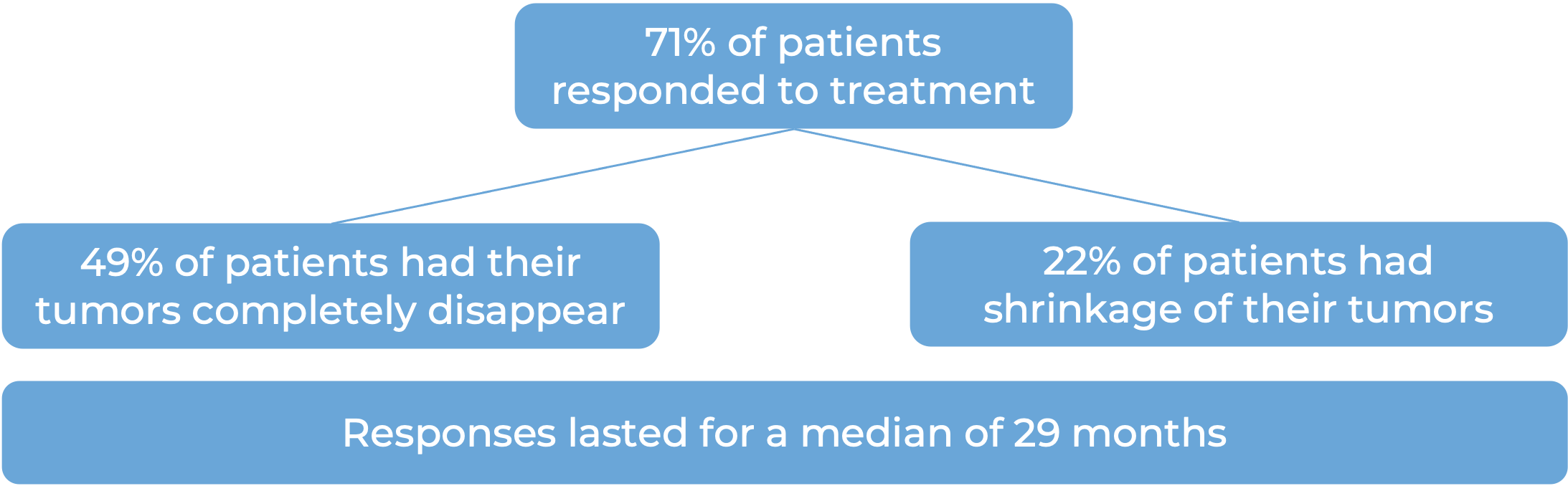
In a clinical study, 117 patients with multiple myeloma who had received at least three prior treatments for their disease, including a proteasome inhibitor, an immunomodulatory agent, and an anti-CD38 antibody (e.g., daratumumab (Darzalex) or isatuximab-irfc (Sarclisa)), but whose cancer either did not respond to treatment (refractory) or had since come back (relapsed), were treated with Lynozyfic:
What are the potential side effects?
The most common side effects of Lynozyfic include pain in the joints and muscles, cytokine release syndrome, cough, upper respiratory tract infection, diarrhea, fatigue, pneumonia, nausea, headache, and shortness of breath. Laboratory abnormalities are also common. Some side effects, such as cytokine release syndrome, immune effector cell-associated neurotoxicity syndrome (ICANS) and other neurologic problems, infections, low white blood cell counts (neutropenia), and liver toxicity/damage can become serious or life-threatening. Patients and caregivers receive careful instructions to monitor for signs and symptoms of side effects. These conditions are managed by the healthcare provider.
Cytokine release syndrome (CRS)
CRS is caused by a widespread release of molecules called cytokines, which can cause inflammation and can affect the function of various organs. Cytokines may be released by the T cells to which Lynozyfic binds, or by other immune cells in the patient’s body. Signs and symptoms of CRS include fever, low blood pressure, hypoxia (low oxygen levels), fast heartbeat rate, shortness of breath, chills, headache, and elevated liver enzymes. CRS typically occurs within hours or a few days after the first or second step-up dose of Lynozyfic in treatment cycle 1. A healthcare provider should be immediately notified if symptoms occur.
Neurologic toxicity or Immune effector cell-associated neurotoxicity syndrome (ICANS)
Some of the cytokines released during CRS can result in disruption of the blood–brain barrier, leading to the development of neurological toxicities. ICANS can occur within hours or days of treatment with Lynozyfic (mainly after the first or second step-up dose in treatment cycle 1). Symptoms of ICANS include shaking, lethargy, seizures, confusion, disorientation, and difficulty with speech or handwriting. A healthcare provider should be immediately notified if symptoms occur.
For a more complete list of possible side effects, see the full prescribing information.
Manufacturer
Regeneron Pharmaceuticals, Inc.
Approval
FDA and EMA
Links to drug websites
Last updated: July 16, 2026