How is this drug name pronounced?
Penpulimab-kcqx: pen-PUH-lih-mab
What cancer(s) does this drug treat?
Nasopharyngeal Cancer
Penpulimab is approved for:
- Patients with nasopharyngeal cancer that does not produce keratin (non-keratinizing) and has spread (metastatic) or returned (recurrent) after a previous treatment. In such cases, patients are treated with penpulimab in combination with gemcitabine and either cisplatin or carboplatin chemotherapies.
- Patients with nasopharyngeal cancer that does not produce keratin (non-keratinizing), has spread (metastatic), and has gotten worse on or after treatment with a platinum-containing chemotherapy and at least one other therapy. In such cases, patients are treated with penpulimab alone.
Limitations of use:
Age: The safety and efficacy of penpulimab in patients under 18 years of age have not been established.
Fertility/Pregnancy/Breastfeeding: Penpulimab can cause harm or death to a fetus and is not recommended for use during pregnancy. Patients who can become pregnant should use effective contraception during treatment and for at least four months after the last dose of penpulimab. Due to the potential for serious adverse reactions in the breastfed child, patients are advised not to breastfeed during treatment and for at least four months after the last dose of penpulimab.
Complications of stem cell transplant: Serious and life-threatening transplant-related complications can occur in patients who are treated with penpulimab before or after receiving a stem cell transplant from another individual.
Solid organ transplant rejection: Treatment with penpulimab can increase the risk of rejection in patients who have received an organ transplant.
What type of immunotherapy is this?
- PD-1 blockade
How does this drug work?
- Target: PD-1
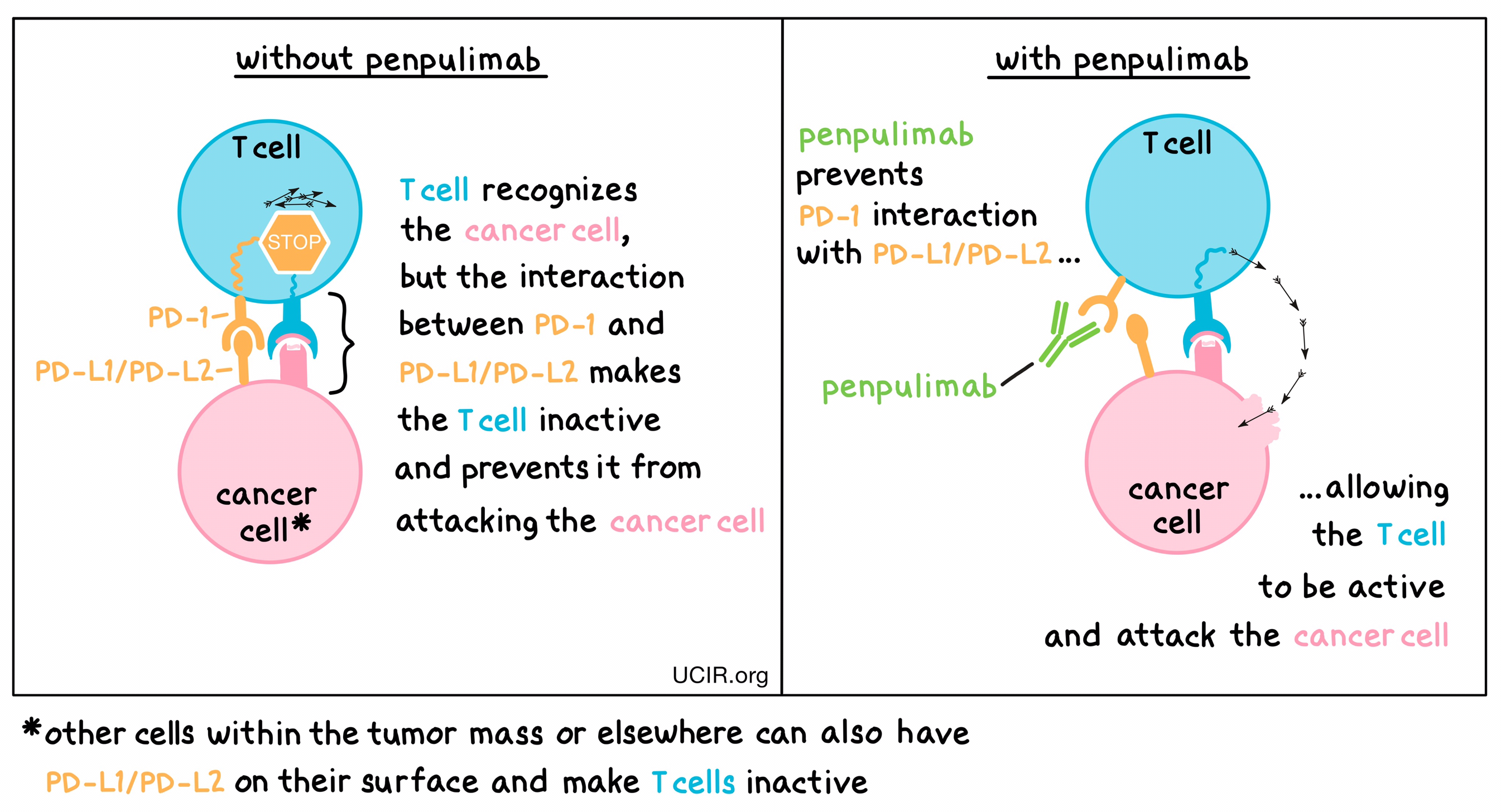
Penpulimab is an antibody that attaches to a molecule called PD-1, which is present on the surface of T cells. In healthy T cells, PD-1 acts as a brake that prevents the cells from creating an out-of-control immune response. However, cancer cells take advantage of PD-1 to make T cells inactive and prevent them from doing their job of killing the cancer cells. This happens because cancer cells or other cells within a tumor have an increased concentration of PD-L1 and PD-L2 molecules on their cell surface, which attach to PD-1. When PD-L1 or PD-L2 interact with the PD-1 receptor on the T cell, the PD-1 sends a signal to the T cell to become inactive. Penpulimab binds to the PD-1 on the T cells in a way that blocks PD-L1 and PD-L2 from interacting with the PD-1 receptor. This blockade on PD-1 allows the T cells to activate and to attack and kill cancer cells.
How is this drug given to patients?
Penpulimab is administered via a tube into a vein (intravenous infusion or i.v.). over the course of 60 minutes. When penpulimab is being used in combination with cisplatin or carboplatin and gemcitabine, it is administered every 3 weeks until the disease progresses, or for a maximum of 24 months. When used on its own, penpulimab is administered every 2 weeks until the disease progresses, or for a maximum of 24 months.
What are the observed clinical results?
For:
Nasopharyngeal Cancer (metastatic or recurrent)
Nasopharyngeal Cancer (previously treated with a platinum-based chemotherapy)
It is important to keep in mind that each patient’s actual outcome is individual and may be different from the results found in the clinical studies. In addition, with immunotherapy, sometimes it takes several months for responses to be observed.
Nasopharyngeal cancer (metastatic or recurrent)
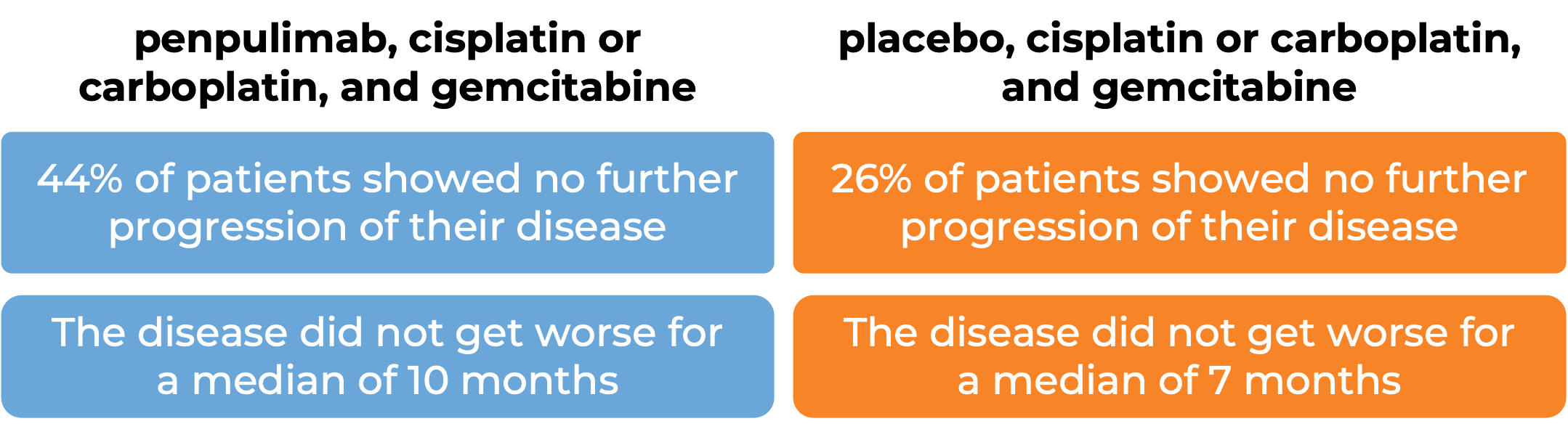
In a clinical trial, 291 patients with non-karatinizing nasopharyngeal cancer that had spread (metastatic) or had returned (is recurrent) were treated with penpulimab, gemcitabine, and either cisplatin or carboplatin chemotherapy or with placebo, gemcitabine, and either cisplatin or carboplatin chemotherapy. At a median follow-up of 19 months:
(For the definition of “median”, click HERE.)
Nasopharyngeal Cancer (previously treated with a platinum-based chemotherapy)
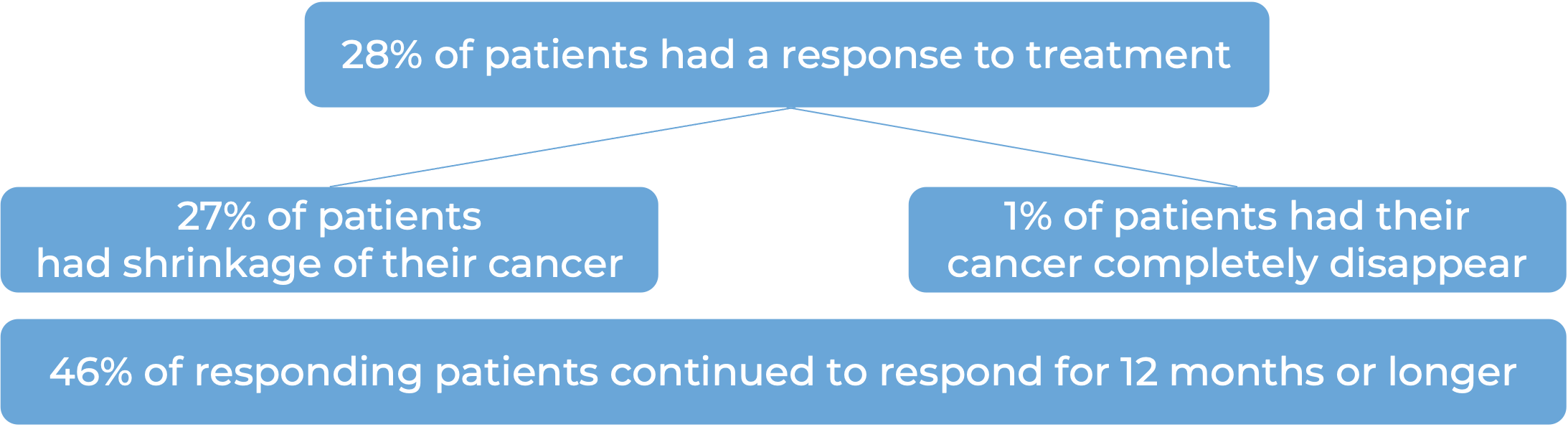
In a clinical trial, 125 patients with non-karatinizing nasopharyngeal cancer that had spread (metastatic) or had come back (recurrent) on or after treatment with a platinum-containing chemotherapy and at least one other therapy were treated with penpulimab.
(For the definition of “median”, click HERE.)
What are the side effects?
When used in combination with gemcitabine and either cisplatin or carboplatin, the most common side effects of penpulimab were nausea, vomiting, low thyroid activity, constipation, decreased appetite, decreased weight, cough, COVID-19 infection, fatigue, rash, and fever. When used on its own, the most common side effects of penpulimab were low red blood cell numbers (anemia) and low thyroid activity.
Penpulimab can cause a patient’s immune cells to attack healthy cells throughout the body. Because of this, penpulimab can cause side effects that can become serious or life-threatening, and may lead to death. Some of the serious side effects related to penpulimab include inflammation of the lungs, colon, liver, skin or kidneys. Additionally, problems can arise with hormone glands. Penpulimab may cause Type 1 diabetes. Serious issues related to the heart, nervous system, eyes, pancreas, muscles, bones, connective tissue, endocrine system, and blood/immune system may also occur. Additionally, patients may experience reactions related to the infusion, which can be severe or life-threatening.
Penpulimab can cause serious and life-threatening complications, including graft-versus-host disease in patients who have received a stem cell transplant before or after being treated with penpulimab. These complications may arise even if patients have been treated with other types of therapy in between the administration of penpulimab and the stem cell transplant. Penpulimab may also cause rejection of solid organ transplants.
Patients should report any symptoms to their healthcare provider, who can then initiate actions to limit or reverse the side effects. For a more complete list of possible side effects, see the full prescribing information.
Additional information
Manufacturer
Akeso Biopharma
Approval
FDA
LInks to drug websites
Other references
- Abstract CT011: Penpulimab versus placebo in combination with chemotherapy as first-line treatment for recurrent or metastatic nasopharyngeal carcinoma: A global, multicenter, randomized, double-blind, phase 3 trial (AK105-304). Hu et al. Cancer Research (2025)
Last updated on January 22, 2026